
Just as a bee,
without hurting the flower,
its colour or scent,
gathers its nectar and escapes,
so should the sage roam in the village.
(Dhammapada 4:49)
without hurting the flower,
its colour or scent,
gathers its nectar and escapes,
so should the sage roam in the village.
(Dhammapada 4:49)
This verse highlights the care and caution with which bees treat flowers: bees help trees bear fruit without damaging either the colour or the fragrance of the trees’ flowers. Buddhist monks and nuns should take the bee as a wise role model and become sages and commit to no harm as they collect alms in the village. More broadly, this verse can be understood to mean that, like the bee, we should take only what is necessary for life without causing destruction (Bodhicaryavatara 8:15f).
|
On the importance of Honey
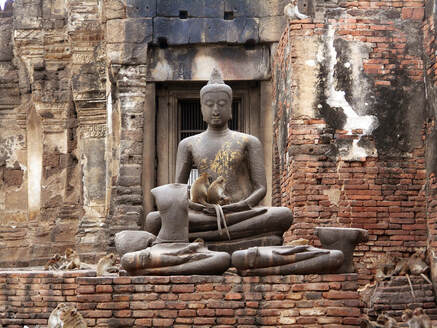
In an attempt to resolve a dispute between two disciples, the Buddha retreated to the wilderness of Perileyya Forest, where he was fed by a monkey and an elephant. While the elephant brought the Buddha fruits, the monkey brought him a honeycomb. When the Buddha accepted the honeycomb, the monkey jumped from tree to tree in joy until it slipped and fell to its death. The monkey’s generosity was rewarded in two ways: first, it was reborn into Tavatimsa heaven. Second, the month of Madhu Purnima, meaning “honey full moon”, was so named to memorialize the monkey. In Bangladesh and India, people celebrate Madhu Purnima to this day by giving honey and fruits to Buddhist monasteries. |
|
Honey generally plays an important role for Buddhist monastics. Depending on their specific tradition, they are having only one or two meals per day. However, the Buddha named five foods that can be consumed at any time of the day, including honey. As a result of this, honey is a particularly welcome offering to monks and nuns wandering the streets each morning with begging bowls.
|
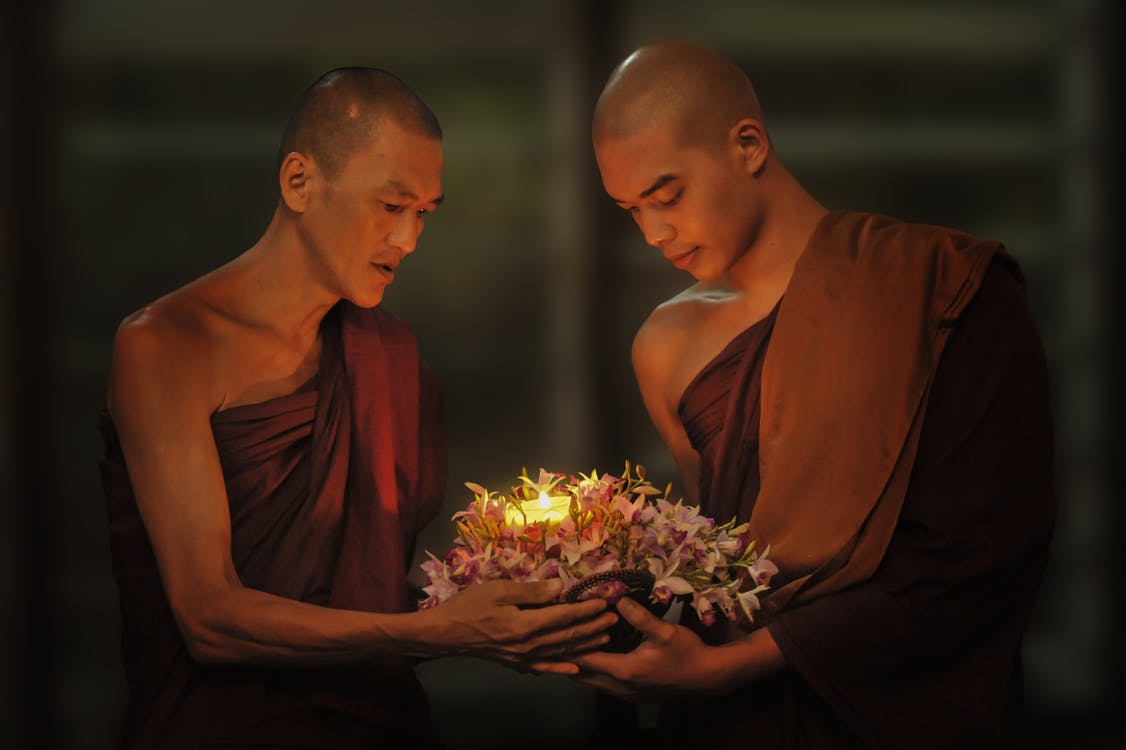
Honey and beeswax are especially important within Theravada Buddhism, which is mostly practiced in Laos, Myanmar, Cambodia and Thailand. There, with the onset of the rainy season, wandering as well as resident monks are retreating to a monastery for three months. The so-called "rains retreat" originated in the time of the historical Buddha and has the intention to protect crops. The monastics where traditionally presented with beeswax candles so they could study night and day. The end of this time called Vassa is celebrated with the Pavarana festival, which in Thailand includes the honey ceremony Tak bat nam peung and a parade featuring elaborately decorated massive beeswax candles.
|
|